

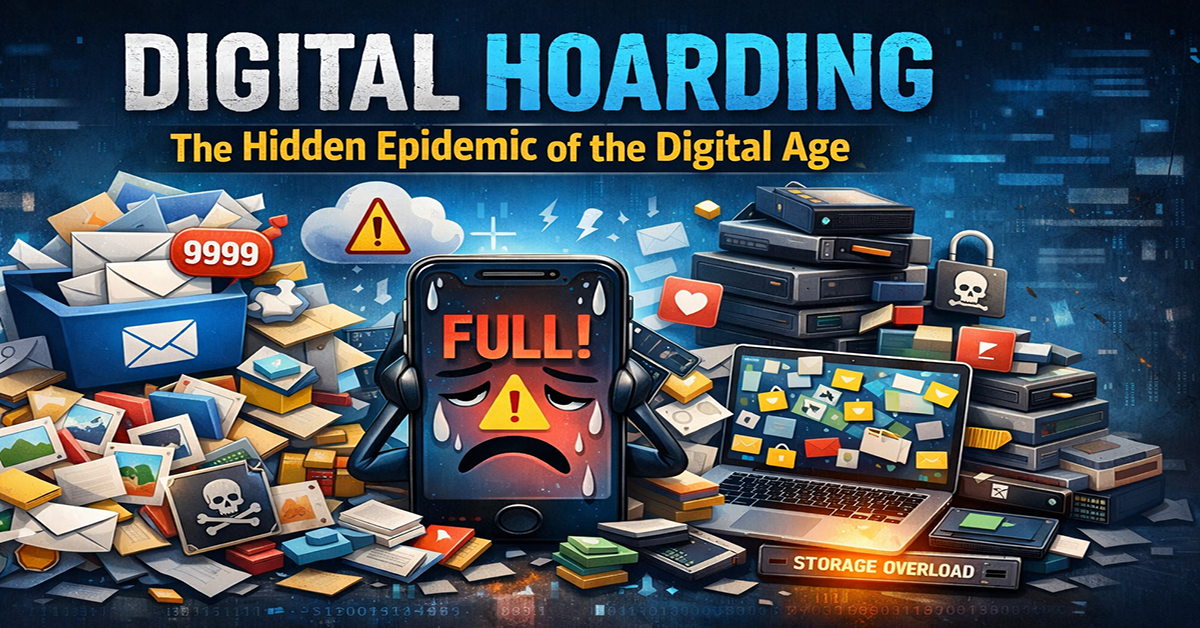
In today’s connected world, digital clutter is becoming an invisible but significant problem. Known as digital hoarding, this phenomenon affects millions globally, silently impacting productivity, mental health, and even device performance.
What is Digital Hoarding?
Digital hoarding is the tendency to accumulate and refuse to delete unnecessary digital files, emails, apps, photos, and other data, often resulting in disorganized devices and storage overload. While physical clutter is visible, digital clutter silently consumes time, attention, and resources.
Key consequences include:
- Mental overload: A cluttered digital environment can trigger stress and reduce focus.
- Slow devices: Excess files, apps, and data slow down phones, laptops, and cloud storage.
- Lost productivity: Searching for files, emails, or apps becomes time-consuming.
- Security risks: Hoarded data is often poorly organized, leaving sensitive information vulnerable.
Why Digital Hoarding Happens
Several psychological and practical factors drive digital hoarding:
- Fear of losing memories: Photos, videos, and messages feel irreplaceable.
- Potential future use: Many files are saved “just in case.”
- Emotional attachment: Digital files often carry sentimental value.
- Instant gratification: Downloading content or apps provides a dopamine boost.
The Global Impact
Digital hoarding is more than an individual issue—it’s a worldwide trend. Excess digital clutter affects mental well-being, workflow efficiency, and even financial resources. For example, paying for additional cloud storage or external drives adds hidden costs, while a cluttered device can reduce performance and increase frustration.
Signs of Digital Hoarding
- Thousands of unread emails or unorganized inboxes.
- Massive photo libraries left unchecked for years.
- Downloaded apps, files, or videos rarely accessed.
- Reluctance to delete files due to fear of losing something important.
Solutions to Reduce Digital Clutter
- Declutter consistently: Dedicate short, regular intervals to remove unnecessary files.
- Organize files: Use folders, tags, and cloud solutions strategically.
- Limit downloads: Only save files or apps that are essential.
- Use cloud storage wisely: Store important items online, but avoid overloading it.
- Digital detox: Occasionally disconnect from devices to refresh the mind.
Why This Matters
Digital hoarding is a modern epidemic that affects billions of devices worldwide. Beyond slowing technology, it impacts mental clarity, productivity, and even personal well-being. Awareness and proactive digital organization are key to preventing long-term negative effects.
Every device cleared of clutter is a step toward mental clarity and efficiency, and spreading awareness about digital hoarding can help millions take control of their digital lives.